How to Choose a Translation Agency for a Tender: Translation Procurement Best Practices for Complex, High-Stakes Projects
The notification arrives just as you’re finalising H1 campaign assets:
“EMEA launch confirmed for June. APAC following in Q3. We’ll need the full brand suite translated — website, product messaging, campaign materials, social content, everything. Procurement’s running a tender. Can you spec what we need?”
It feels routine. Another box to tick before launch.
But six months later — as your summer launch approaches — when your German landing page reads like an instruction manual, your French social campaign misses every cultural nuance, and your brand voice has splintered into five unrecognisable versions across markets — that’s when the stakes become clear.
For Marketing and Brand Managers leading global expansion, the translation partner you choose doesn’t just affect timelines and budgets. It shapes how millions of customers experience your brand in their language. Get it wrong, and you’re managing reputation damage across multiple markets simultaneously. Get it right, and you’ve built the infrastructure for consistent, compelling brand presence at scale.
This guide explores translation procurement best practices to help you confidently structure your requirements, evaluate language service providers (LSPs), and protect brand integrity across every market you enter.
Why Marketing Managers Cannot Delegate Translation Decisions When Expanding into International Markets
Here’s a scenario we see repeatedly:
A UK-based consumer brand expands into Germany. Marketing briefs the agency brilliantly — tone of voice guidelines, brand personality, visual identity. The campaign launches. The creative looks impeccable. Then the customer feedback arrives:
“The messaging feels corporate and cold. It’s nothing like the warm, conversational brand we loved in the UK.”
What happened? The translation was technically accurate. Every word was correct. But somewhere between English and German, the brand died. This isn’t a linguistic failure. It’s a strategic one.
Global expansion is accelerating. Brands that once tested one or two European markets now launch simultaneously across five continents. Digital-first marketing means content volumes have multiplied — websites, email campaigns, social media, product descriptions, customer communications. And regulatory requirements around consumer protection, data privacy, and accessibility mean every word must be right, not just close enough.
For brand managers, this creates three interconnected pressures:
-
Velocity: Campaigns need to move faster. Launch windows are tighter. Markets won’t wait.
-
Consistency: Your brand voice cannot fracture. One tone in London, another in Lyon, another in Lagos isn’t localisation — it’s brand dilution.
-
Cost discipline: Marketing budgets are scrutinised. Every pound spent on translation must deliver measurable value.
Yet most brands approach translation procurement as a purchasing exercise rather than a brand investment. They optimise for cost per word, not consistency per market. They evaluate linguistic capability, not creative understanding. The result? Disconnected customer experiences, fragmented brand messaging, and teams constantly firefighting linguistic inconsistencies instead of building markets.
What Are the Hidden Costs of Choosing the Wrong Translation Service Provider for Your Brand
When marketing leaders share their localisation challenges, the same patterns emerge.
How Poor Translation Quality Damages Brand Voice Consistency Across Multiple Markets
Your brand has a personality. It’s confident but not arrogant. Innovative but accessible. Perhaps there’s wit, warmth, or a distinctive edge that differentiates you from competitors. That personality took years to build. It’s embedded in every piece of copy, every campaign, every customer interaction. Now translate it into twelve languages with six different linguists working independently. What happens?
The confident tone becomes aggressive in German. The accessible voice turns simplistic in Spanish. The distinctive wit is completely lost in Japanese. Within months, you’re not operating one global brand — you’re managing thirteen regional versions, each pulling in different directions. Customers notice. They encounter your brand across touchpoints. If the Instagram caption feels different from the website, which feels different from the email campaign, trust erodes. The brand becomes unfamiliar in its own markets.
Why Translation Delays Impact Product Launch Timelines and Revenue in Global Markets
You’ve spent six months developing the campaign. Creative is approved. Media is booked. Influencers are lined up. Then translation becomes the bottleneck. The agency delivers late. Quality requires rework. Approval cycles extend because stakeholders can’t verify accuracy. Launch is pushed back from June to July. Meanwhile, your competitor who launched on schedule is already building market share. In fast-moving categories, first-mover advantage is real. Being a month late isn’t just four weeks of lost time — it’s four weeks of lost customer acquisition, lost market positioning, and lost revenue that can never be recovered.
How Internal Review Cycles Increase When Translation Quality Is Inconsistent
Poor-quality translation doesn’t just delay launches. It creates perpetual internal workload. Your regional teams, who should be building go-to-market strategies, are instead correcting clumsy phrasing and fixing terminology. Your product marketers are rewriting translated feature descriptions. Your social media managers are editing captions because they don’t sound like your brand. This isn’t translation. It’s a hidden tax on productivity that makes every campaign more expensive and slower to execute.
What Reputational Risks Do Brands Face With Poor Translation in Culturally Sensitive Markets
Some errors are operational inconveniences. Others are reputational crises. A beauty brand launches in the Middle East with imagery and messaging that inadvertently offends cultural norms. A food company enters Southeast Asia with product descriptions that misrepresent ingredients, violating religious dietary standards. A fashion brand’s playful campaign tagline translates into something inappropriate in Mandarin. These aren’t hypothetical scenarios. They’re real cases that generated social media backlash, required public apologies, and in some instances, forced complete market withdrawals. For brand managers, the risk isn’t just about words. It’s about cultural intelligence, market sensitivity, and understanding how messaging lands with real customers in real contexts.
How to Write Translation Requirements That Maintain Brand Consistency Across Languages
If you’re searching for “how to choose a translation agency for a tender” or building your translation RFP checklist, the most critical step happens before you contact any provider: defining what success actually looks like. Most RFPs focus on operational requirements — word counts, turnaround times, pricing structures. These matter. But they’re not where brand managers should start.

Here’s a more strategic framework:
Step 1: How to Document Your Brand Voice Guidelines Before Requesting Translation Quotes
Before discussing volume or timelines, document:
-
Brand personality traits. Not aspirational statements — actual characteristics reflected in your copy today.
-
Tone of voice principles. What makes your brand sound like itself? What should it never sound like?
-
Cultural boundaries. Topics, phrases, or stylistic approaches that are off-brand in any market.
-
Target customer profiles per market. Who are you speaking to? What are their values, expectations, and communication preferences?
Provide real examples. Show the agency what great looks like — and what poor looks like. Share campaigns that captured your brand perfectly, and others that missed the mark. This becomes your evaluation criteria. When agencies submit sample translations, you’re not assessing linguistic accuracy. You’re assessing whether they understood your brand.
Step 2: What Are the Different Types of Marketing Translation Services You Should Request
Not all content deserves the same approach. Marketing content exists on a spectrum:
Brand-Defining Content
Campaign messaging, brand manifestos, hero product launches — this is where your brand voice lives. This requires transcreation: culturally adapted creative work by specialist linguists who understand brand marketing, not just language.
Customer-Facing Functional Content
Product descriptions, FAQs, email nurture sequences, website navigation — clarity and consistency matter most. This needs professional translation with rigorous terminology management to ensure customers experience seamless language across touchpoints.
High-Volume Tactical Content
Blog posts, social media updates, user-generated content — speed and scale are priorities. This may be suitable for AI-assisted translation with professional review, provided quality standards are maintained.
The right partner should be capable of delivering all three approaches within one coherent workflow, with transparent pricing differentiation between each tier.
Step 3: How to Evaluate Cultural Competency When Choosing a Translation Agency for Marketing Content
Technical translation agencies can handle instruction manuals. Brand translation requires something different: cultural fluency and creative judgement.
In your RFP, request:
-
Samples of brand transcreation work. Not legal contracts or technical manuals—actual marketing campaigns they’ve localised.
-
Cultural adaptation examples. How have they navigated messaging for culturally sensitive markets?
-
Linguist profiles. Are they working with translators or marketing copywriters who specialise in your sector and understand brand positioning?
The best indicator? Case studies from brands similar to yours. If they’ve successfully localised consumer technology, beauty, fashion, or lifestyle brands, they understand the stakes. If their portfolio is dominated by pharmaceutical or engineering clients, they may lack the creative mindset your campaigns require.
Step 4: Why Brand Terminology Management Is Essential for Consistent Translation Quality
Your brand uses specific language. Product names. Feature terminology. Taglines. Value propositions. These must remain consistent across every piece of content, in every language, across every market. Inconsistent terminology doesn’t just confuse customers — it fragments your brand identity.
Ask potential partners:
-
How do they build and maintain client-specific terminology databases?
-
Can they integrate your brand guidelines into their workflow?
-
Do they use translation memory to ensure consistency across campaigns?
-
How do they handle new product launches where terminology is still evolving?
Scalable brand management requires technology. Glossaries stored in spreadsheets aren’t sufficient for brands managing hundreds of campaigns annually. Look for providers with structured terminology systems that can scale with your growth.
Step 5: What Quality Assurance Process Should Translation Agencies Have for Marketing Projects
Quality isn’t subjective. It’s structural. Strong providers have defined QA workflows:
-
Initial translation by sector-specialist linguists.
-
Editorial review by a second linguist for tone, style, and cultural accuracy.
-
Proofreading for formatting, consistency, and technical correctness.
-
Brand review stage where your team validates messaging before launch.
For brand-critical content, insist on seeing this workflow. Agencies that can’t articulate their quality process don’t have one.
Step 6: Which Performance Metrics Should You Track When Managing Translation Vendors
How will you know if the partnership is working? Define KPIs that matter to marketing:
-
On-time delivery rates for campaign launches.
-
Internal review cycle time — how much rework is required after translation?
-
Regional team satisfaction scores — are your market leads confident in the content quality?
-
Cost per campaign rather than cost per word, so you can track total investment.
Technology-enabled providers offer client dashboards showing real-time project status, spend tracking, and historical performance. This visibility allows you to manage translation like any other marketing channel — with data, accountability, and continuous improvement.
Should You Use AI Translation or Human Translation for Brand Marketing Content
No discussion about modern translation is complete without addressing AI. Machine translation engines are powerful. They’ve improved dramatically. But they remain fundamentally limited in one critical dimension: they don’t understand brand. AI can translate words. It cannot translate emotion, wit, cultural resonance, or brand personality. It doesn’t know when to break grammar rules for effect. It can’t recognise when a literal translation would sound corporate, when humour falls flat across cultures, or when a phrase carries unintended connotations.
For brand managers, this creates a strategic choice: where does AI add value, and where does it introduce risk?
Here’s a pragmatic framework:
Brand-Defining Content: Human-Led Creative Translation
Campaign messaging, product launches, brand storytelling — this is not the place for cost optimisation through AI. This requires specialist linguists with creative judgement, cultural fluency, and deep understanding of your brand.
Customer-Facing Functional Content: Human Translation with AI Support
Product descriptions, website copy, email flows — professional linguists working with AI tools to increase efficiency while maintaining brand consistency through terminology management and editorial review.
High-Volume Tactical Content: AI with Professional Review
Internal updates, high-frequency social posts, informational content — AI translation with structured post-editing by professional linguists, ensuring accuracy and readability without unnecessary cost.
The strongest translation partners don’t position AI as a replacement for human expertise. They integrate it strategically within workflows that maintain brand integrity and creative quality at every level.
What Makes a Good Translation Agency Partnership for Global Brand Management
After years of managing global brand launches, marketing leaders who’ve found the right partners share common experiences.
How Translation Providers Should Understand Your Brand Identity and Marketing Goals
The best translation providers don’t just deliver words. They internalise your brand. They challenge messaging that won’t resonate in specific markets. They suggest cultural adaptations before you ask. They proactively flag terminology inconsistencies across campaigns. They understand your launch cycles and build workflows around your operational reality, not theirs. You stop explaining your brand with every new project. They already know.
Why Seamless Workflow Integration Matters When Choosing Translation Services for Marketing Teams
Strong partners integrate into your existing workflows. They connect via API with your content management system. They accept briefs in whatever format works for your team. They deliver translations in formats ready for your designers, developers, or regional teams to deploy immediately. Translation stops being a bottleneck and becomes simply part of the production process — reliable, predictable, and fast.
What Real-Time Project Visibility Should Translation Vendors Provide for Multi-Market Campaigns
You’re managing multiple campaigns across multiple markets. You need real-time visibility. Great providers offer dashboards showing project status, upcoming deadlines, budget tracking, and historical performance. You can see exactly where each campaign sits in the translation workflow, download completed assets, and track spend without chasing project managers for updates. This transparency builds confidence. You’re never uncertain about delivery. You can plan with precision.
How to Find Translation Partners That Scale With Your International Market Expansion
You’re launching into three markets this year. Seven in 2027. Fifteen by 2028. Resilient providers scale without friction. They have the linguist networks, operational capacity, and technology infrastructure to grow with you. You’re not constantly re-tendering as volume increases. The partnership adapts. This stability has compounding value. Translation memory improves. Terminology management strengthens. Efficiency increases. Cost-per-campaign decreases even as total output grows.
What Are the Warning Signs of a Poor Translation Agency for Marketing Content
Conversely, certain warning signs appear consistently in unsuccessful partnerships:
Lack of Portfolio Relevance
If their case studies are dominated by technical or regulatory documentation, they may lack the creative mindset required for brand marketing.
Opacity Around Process
If they can’t clearly articulate their QA workflow, linguist vetting procedures, or how they manage brand consistency, they don’t have structured processes. Quality becomes inconsistent and unpredictable.
Resistance to Brand Immersion
If they don’t want to deeply understand your brand guidelines, target audiences, or creative principles, they’re treating translation as a transactional service. Brand integrity will suffer.
Rigid, One-Size-Fits-All Pricing
If they can’t differentiate pricing between transcreation, professional translation, and AI-assisted workflows, they’re not sophisticated enough to support nuanced brand requirements.
No Technology Integration
If they rely on email file exchange rather than API integration, project portals, or workflow automation, they can’t scale with you. Manual processes create delays, errors, and operational friction.
Absence of Performance Metrics
If they don’t measure delivery performance, quality scores, or client satisfaction, they’re not managing to outcomes. You’ll have no data to assess partnership value.
What Translation Industry Trends Will Impact Global Marketing Strategy in 2026-2030
Looking ahead, several forces will reshape how brands approach multilingual marketing.
Why Faster Content Velocity Requires Agile Translation Workflows for Digital Marketing
Digital marketing moves faster every year. Weekly campaign updates become daily. Product launches once planned months ahead now execute in weeks. Translation workflows must match this pace. Providers who can deliver quality at speed — through smart automation, scalable linguist networks, and streamlined approval processes — will hold competitive advantage.
How Hyper-Personalisation in Marketing Will Increase Translation Volume Across Languages
Brands increasingly personalise messaging by customer segment, behaviour, and preference. This sophistication is now extending across markets. Imagine creating tailored email nurture sequences for six customer segments, each localised into eight languages. That’s 48 content variations requiring consistent brand voice and terminology. Only technology-enabled, tightly integrated translation workflows can support this level of personalisation at scale.
Will AI Replace Human Translators for Marketing Content or Augment Their Work
AI translation engines are improving. The next generation will better understand cultural context, brand tone, and creative intent. But they won’t replace human creative judgement — they’ll augment it. The most effective workflows will combine AI efficiency with human cultural fluency and brand expertise, creating faster, more cost-efficient processes without sacrificing quality. Brand managers should assess how future-ready a provider’s approach is. Are they experimenting with AI thoughtfully? Or are they either dismissing it entirely or replacing humans prematurely?
Why ESG Compliance and Inclusive Language Matter in Brand Translation for Global Markets
Consumers increasingly expect brands to demonstrate social responsibility. This extends to language. Inclusive terminology. Accessibility compliance. Cultural sensitivity. Environmental messaging that resonates authentically across markets. These aren’t optional add-ons — they’re brand essentials. Translation partners must understand these dimensions and proactively advise on culturally appropriate, inclusive messaging across every market.
Complete Translation RFP Checklist for Marketing Managers Running Procurement Tenders
To support your localisation procurement process, here’s a focused checklist:
Brand Understanding
-
Portfolio of brand marketing work, not just technical translation
-
Demonstrated cultural intelligence and market sensitivity
-
Sector expertise in your industry
-
Case studies from brands with similar positioning
Creative Capability
-
Access to marketing copywriters and transcreation specialists, not just translators
-
Examples of culturally adapted campaigns
-
Ability to differentiate between translation tiers (brand-defining, functional, tactical)
Quality & Consistency
-
ISO 17100 certification or equivalent structured QA process
-
Terminology management system
-
Translation memory technology
-
Multi-step review workflows
Operational Integration
-
API connectivity with your CMS or marketing platforms
-
Project portal for real-time visibility
-
Formats compatible with your design and development workflows
-
Flexible turnaround options for urgent campaigns
Technology & Innovation
-
Transparent approach to AI integration
-
Clear differentiation between human and machine workflows
-
Scalable infrastructure for growing content volumes
Commercial Transparency
-
Differentiated pricing for transcreation, translation, and AI-assisted workflows
-
Volume discounts or subscription models for ongoing partnerships
-
Spend tracking and reporting dashboards
Performance Management
-
Defined KPIs aligned to marketing priorities
-
Regular performance reviews
-
Account management structure
-
Escalation procedures
How to Choose the Right Translation Partner for Long-Term Global Brand Success
Choosing a translation partner for complex, brand-critical work isn’t a procurement exercise. It’s a strategic decision that shapes how customers experience your brand across every market you enter. The wrong partner fragments your brand voice, slows your launches, and turns every campaign into a firefight. The right partner becomes an invisible extension of your team — protecting brand integrity, accelerating time-to-market, and scaling effortlessly as your ambition grows.
With a structured, strategic approach grounded in translation procurement best practices, marketing and brand leaders can confidently evaluate partners who deliver not just translations, but sustainable competitive advantage in global markets. The challenges are real. The risks are significant. But they’re entirely manageable with the right partner and the right framework.
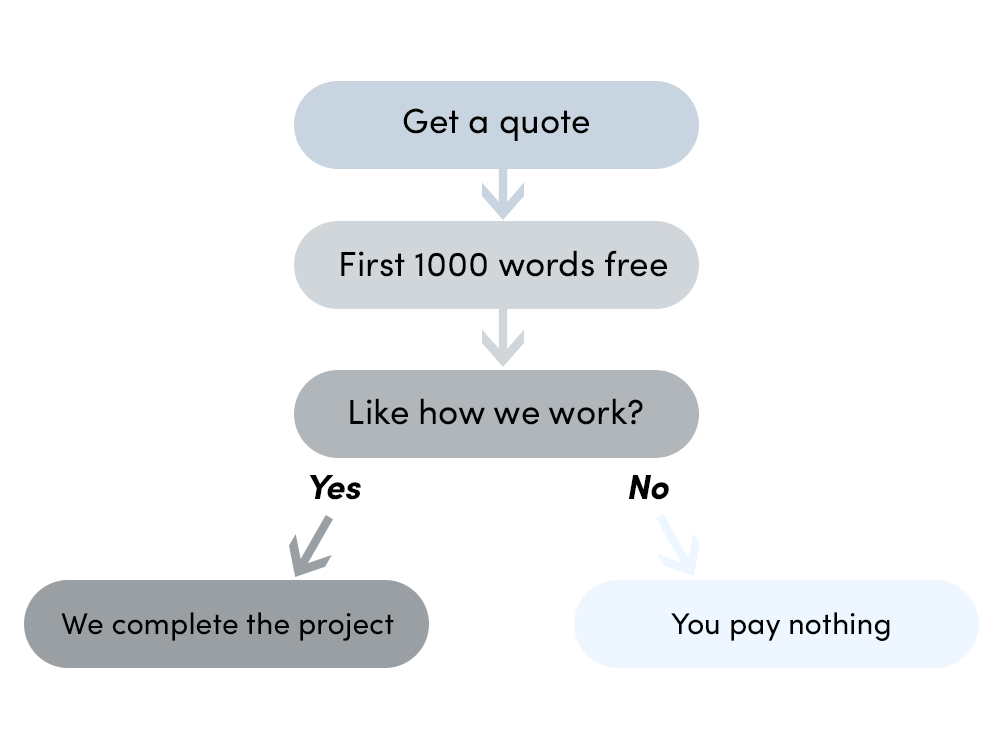
If you’d like to explore how these best practices could support your global brand strategy, our team at LingvoHouse brings deep expertise in brand-focused localisation. We work with ambitious marketing leaders to build scalable, brand-consistent multilingual infrastructure that turns global expansion from operational complexity into strategic advantage. For a practical next step, you can get an instant quote via our platform to benchmark costs and workflows — bringing clarity and transparency to your localisation procurement process from day one.